When a coup empties the banks: life under Myanmar's new economy
Frozen cash withdrawals, money moved through informal agents, and prices ten times what they were. A first-hand account of Myanmar's economy since the coup.
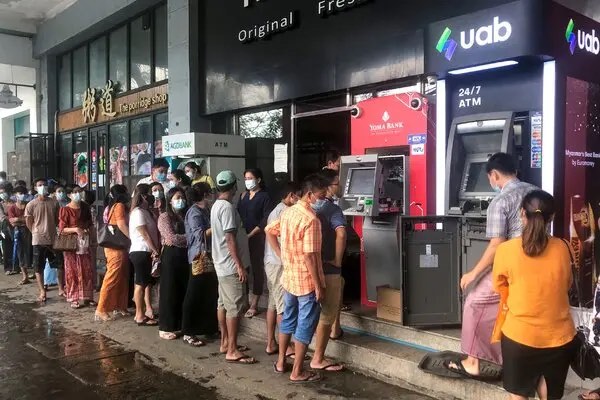
Frozen cash
In the days right after the coup, one of the first things people felt was the sudden inability to get their own money out of the bank. Transfers through apps still worked normally, but cash withdrawals didn't. In those first few days, the limit sat at the equivalent of 2,000 baht.
Business accounts could get around it. If you could show the bank you needed the cash to run a business, withdrawals were possible. For an ordinary person, it was nearly impossible. The reason wasn't really about control. The banks simply didn't have enough physical cash on hand, in a country that was already carrying heavy debt.
Since then, moving money between Myanmar and Thailand has shifted almost entirely to informal channels. Well-known online agents handle transfers in both directions, since no functioning currency exchange exists anymore. People have gone back to older forms of holding value too: gold and cash are common stores of wealth again, and QR payments remain the most-used method for everyday purchases.
Hope, then the slow squeeze
In the first month after the coup, life still felt mostly normal. People weren't panicking yet. If anything, there was hope. The resistance movement had real momentum, and many believed it was only a matter of time before things turned around, that this was temporary.
That hope didn't translate into stability. Within two to three years, land-based imports from other countries had stopped altogether. By 2024, the price of daily necessities had climbed to the point where people started making runs across the border just to buy basics like shampoo and bring them back home, either to use themselves or resell.
What ten times the price looks like
The scale of the inflation is hard to grasp without a comparison. Prices haven't doubled or tripled. In many cases, they've gone up tenfold or more.
Before the coup, a single egg cost 100 kyat. Now it's 700 kyat. A bundle of morning glory, an everyday vegetable, cheap by definition, went from 100 kyat to 1,000 kyat. It's become something people think of as a luxury now, not a staple.
Set against that, the basic daily wage in Myanmar today sits somewhere around 2,500 to 3,000 kyat. For anyone raising children, the math simply doesn't work.
After dark
Most people don't go out after 7 p.m. anymore. It isn't superstition. The streets genuinely aren't safe. Hard times produce desperate people, and desperate people turn to crime not because they want to, but because they've run out of other options.
Who's safe and who isn't often comes down to family background. Wealthy families are largely untouchable. If a criminal targets someone from a rich family, there's a real chance that family has ties to the junta or the military, and going after them can mean a death sentence for the criminal. Ordinary families don't have that protection. They're the ones left exposed.
Strangers abroad
Outside Myanmar, the same wariness follows people. In diaspora communities, you genuinely don't know if the person next to you comes from a family connected to the military controlling your home region, or if they're a normal citizen who fled like everyone else. The safer instinct is to treat each other neutrally, because if you openly say you hate the military to the wrong person, and it gets back to their family, that family can retaliate against whoever you left behind at home.
Some kids from military-connected families feel trapped by that inheritance. They didn't choose their family, and they can't openly do anything about it, so they stay quiet. Others find a different kind of courage, quietly using their own family's money to support the resistance, even while their relatives remain on the other side.
The question everyone's asking
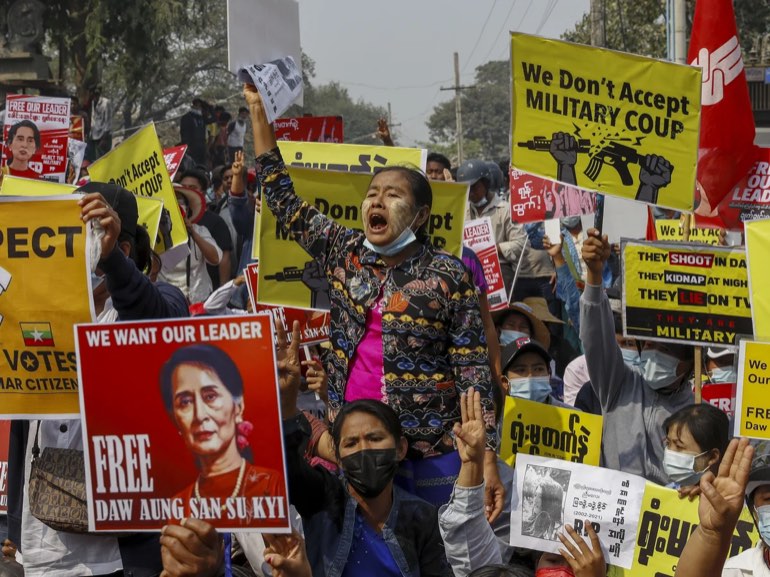
Right now, the question on everyone's mind inside Myanmar is whether Aung San Suu Kyi is still alive. A few weeks ago, photos reportedly surfaced showing her alive and meeting with officials from the international community, including the Red Cross, the first real evidence in a long time that she's still living.
Note: This account reflects one individual's personal experience and secondhand knowledge shared with the author. Specific figures, dates, and claims should be independently verified.