Concerts, checkpoints, and trade bans: how the junta keeps control
Approved concerts and cooperative celebrities, a trade order that stops fourteen goods reaching Mandalay, and a draft that forges IDs for minors. Three fronts of the same strategy.
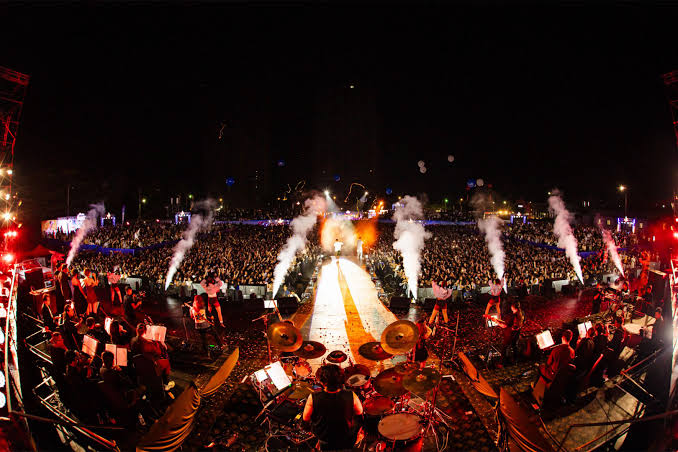
In Myanmar, every concert and public show now requires approval from the military government before it can go ahead. The clearance process looks bureaucratic, but its purpose is political. Letting entertainment continue gives young people a sense that daily life is still normal, even as the country remains under military rule. Alcohol and drugs are a regular feature at these events, and organizers and attendees alike say the atmosphere dulls the appetite for confrontation, particularly among the generation the junta most needs to keep passive.
Celebrities and influencers who show up at these events, or speak favorably of the authorities that approved them, are doing more than attending a concert. Several public figures have echoed the junta's own framing directly: that the military is protecting the country and its businesses, that the armed resistance is the side causing instability, and that the military is only responding to it. That framing runs alongside a parallel line the junta pushes through state media, that young people have been misled by foreign ideas and foreign entertainment, that they've lost their attachment to the country, and that this is why they've turned against the government. It's a story built to move blame off the military and onto the people resisting it.
Sai Sai Kham Leng's return
The clearest current example is a concert set for 6 September in what's being marketed as the "Sai Sai Mandalay Show." The performer, Sai Sai Kham Leng, is one of the best-known names in Burmese hip-hop, a career that stretches back to the early 2000s and once earned him a spot on Forbes Asia's list of the region's most influential social media figures. He built a cosmetics line, SAI Cosmetic, around a fan base that skews young and female, and has carried brand deals with companies including Coca-Cola and Visa.
When the military seized power in February 2021, Sai Sai's reaction was tepid. He changed his profile photo to red, the color associated with the ousted National League for Democracy, and posted a brief message hoping his followers were safe. Other Burmese celebrities went further, appearing at street protests and posting the three-finger salute associated with the resistance. Sai Sai didn't, and the gap cost him a substantial online following. He kept a low public profile for years afterward.
His return to the stage is being read locally as a sign of where his business interests sit. Ticketing platforms list the venue as Mandalar Thiri Sport Stadium in Taunggyi, Shan State, rather than Mandalay itself, a discrepancy against the show's branding that remains unexplained, whether it reflects a late venue change or a naming decision unrelated to the actual city. Either way, the broader picture holds up: performers who stayed quiet through the coup, or whose businesses are tied to military-linked interests, are the ones being cleared to headline again, and their return is being used to project a sense of cultural normalcy the junta has every reason to want the public to see.
Squeezing supply lines
A separate order this week tightens trade between regions inside the country, part of a push to force domestic production over imports. According to the account behind this piece, fourteen specific goods are now barred from moving from Yangon to Mandalay: slippers, phones, batteries, light bulbs, tissue, camphor balls, toothbrushes and toothpaste, soap, diapers, car tires, tire tubes, construction materials, and incense. At the international border, the list runs to 35 items, including something as basic as instant noodles.
The measure fits a pattern that's been documented for years rather than appearing out of nowhere. A list of 35 restricted border goods first circulated in 2022 under the junta's now-defunct Foreign Exchange Supervision Committee and has resurfaced more than once since, consistently naming instant noodles, vermicelli, biscuits, condensed milk, and fresh fruit among the banned items. In a related move in 2023, the regime barred imported soap, toothpaste, and toothbrushes at border crossings days after the junta's second-in-command toured a military-owned soap factory and pressed it to expand domestic output. Coverage at the time treated the ban less as currency policy than as a way to clear imported competition for military-linked manufacturers. Along the Muse-Mandalay highway, checkpoints have repeatedly confiscated shipments of household goods, and markets in Mandalay itself have been raided over what authorities call illegal imports.
What hasn't turned up in public reporting yet is the specific claim that this week's restriction runs only between Yangon and Mandalay rather than applying more broadly, so that detail rests on the account behind this piece rather than on any document made public. The logic behind it tracks with how the junta has operated elsewhere, though. Mandalay is widely seen as a stronghold of resistance activity, and cutting its supply lines, whether through a formal trade order or through checkpoint enforcement, is a way to apply pressure without opening a new front. A comparable case surfaced in September 2025 in Mandalay Region's Myingyan District, where junta troops and an allied militia blocked villagers from entering nearby towns to buy rice, cooking oil, and medicine, confiscating what people carried and threatening those who tried anyway. The effect is the same regardless of the exact mechanism: when basic goods become harder to get, day-to-day life gets harder, and so does anything that depends on a functioning supply chain, resistance included.
Conscription, violence, and blackouts
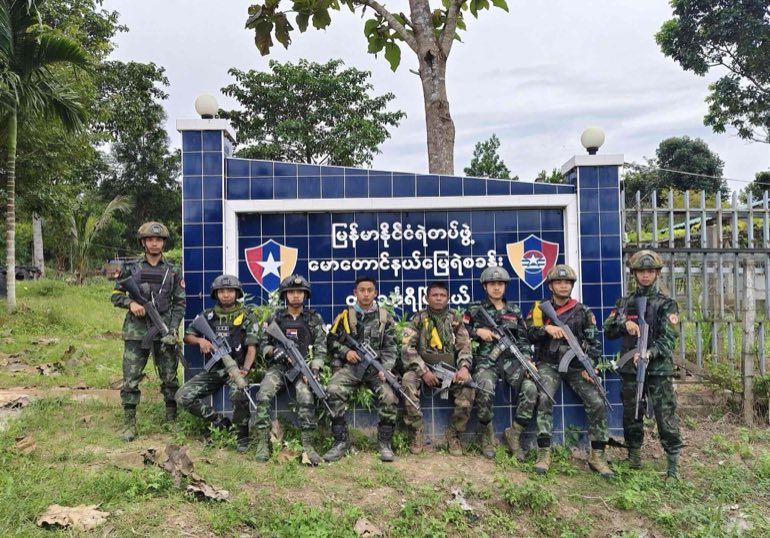
The junta's more direct forms of control haven't eased. Minors continue to be seized and issued falsified identification listing them as adults so they can be sent for military service, and this isn't an isolated allegation. Since the People's Military Service Law took effect in February 2024, drafting men aged 18 to 35 and women aged 18 to 27, monitoring groups and independent monks have documented repeated cases of underage boys pulled off the street and given fabricated ID cards before being routed toward training camps. One case in Mandalay this past May involved a minor taken this way; his parents managed to track him down and secure his release before he went further into the system. In Yangon, a 47-year-old trishaw driver had his age altered downward on official paperwork to place him inside the draft window. A parallel black market has grown around the draft itself, with families reportedly paying several million kyats to buy a substitute or avoid conscription once a name comes up.
Killings continue without warning or public explanation, in line with continued reporting this year of airstrikes and military offensives killing civilians in Rakhine, Magway, and Bago. Power cuts and severed communications remain routine, running alongside a steady stream of state messaging aimed at convincing the public the military is what's holding the country together.
None of these tactics is new by itself. What stands out is how deliberately they work together: entertainment and cooperative public figures to manage the narrative, trade restrictions that hit specific regions and goods to manage the economy, and conscription, violence, and blackouts to manage the population directly.
Note: This account reflects one person's individual experience and understanding of the situation in Myanmar, supplemented here with publicly reported context. The Yangon to Mandalay item list and the concert venue in particular remain unverified.